

If you have been trying to figure out whether you need a self care journal or a therapy workbook, you are already asking a more sophisticated question than most wellness content gives you credit for. You are not asking whether to do the work. You are asking which tool matches the work you are ready to do right now.
That is a meaningful distinction. And it deserves a clear answer.
The emotional healing for Black women over 40 landscape includes both tools. They are not the same thing. They are not interchangeable. And knowing the difference can save you months of using the wrong resource and wondering why it is not doing what you hoped.
This post breaks it down directly so you can make the right choice for where you actually are.
What a Self-Care Journal Is Actually Designed to Do
A self-care journal is a tool for ongoing, daily practice. It is designed to give you a structured space to check in with yourself, process what is happening in your present life, and build a sustainable relationship with your own inner experience over time.
The best healing tools for Black women in this category are organized around themes rather than clinical frameworks. They use prompts that invite reflection without requiring excavation. They are accessible at any stage of healing. You do not need to be in crisis to use one. You do not need to have a diagnosis. You do not need to be in therapy. You simply need to be willing to show up for yourself on a regular basis and engage honestly with what comes up.
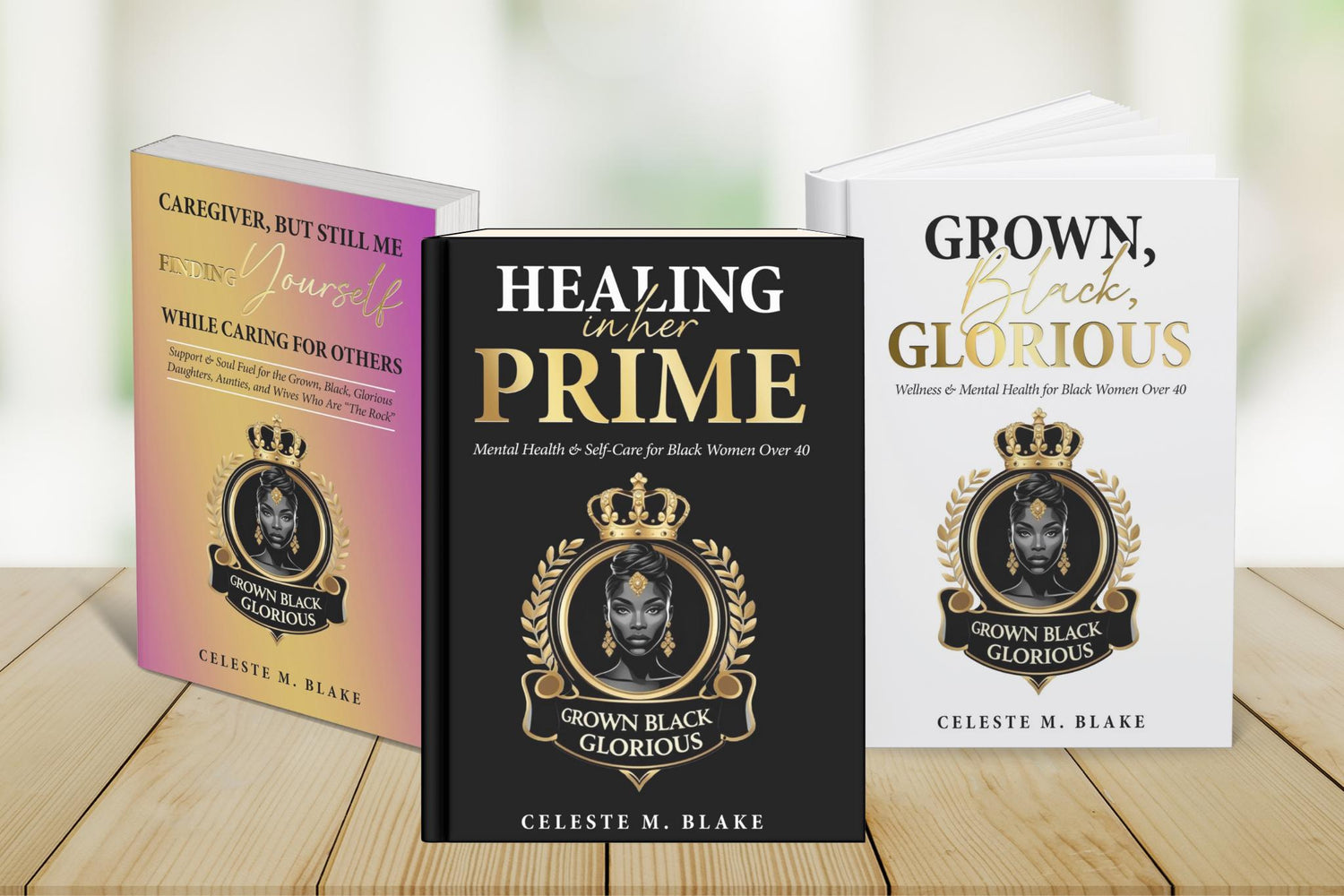
This is exactly how the Self-Care Journal Bundle for Black Women 40+ was designed for women who are in a maintenance or growth phase of healing. Women who have done some work and are looking for a daily practice to sustain and deepen it. Women who are in a relatively stable season and want to use that stability to go inward. Women who want to build self-awareness gradually rather than all at once.
It is also an excellent starting point for women who are new to inner work and need a low-barrier entry into the practice of paying attention to themselves.
What a self-care journal is not designed to do is provide clinical structure for processing significant trauma, diagnosing emotional patterns, or replacing therapeutic intervention. It is a daily companion, not a clinical tool.
What a Therapy Workbook Is Actually Designed to Do
A therapy workbook is a structured clinical or psychoeducational resource. It is typically organized around a specific framework, such as cognitive behavioral therapy, dialectical behavior therapy, or grief processing, and it guides you through exercises designed to produce measurable shifts in thought patterns, emotional responses, or behavioral tendencies.
For Black women exploring the self care journal or workbook question, the key distinction is that a therapy workbook assumes a level of readiness for direct engagement with difficult material. It asks you to look at specific patterns, trace them to their origins, and practice new responses. That is valuable work. It is also work that requires emotional capacity and stability to do safely.
Why Journaling for Emotional Healing Is the Practice Black Women Over 40 Have Been Waiting For goes deep on why the daily practice piece matters so much alongside any structured clinical work you are doing.
Therapy workbooks work best when used in conjunction with a therapist who can help you process what the exercises bring up. They can be used independently, and many women do use them that way effectively. But independent use requires a degree of self-awareness and emotional regulation that takes time to build. If you open a therapy workbook and find that the exercises leave you feeling worse rather than better or more dysregulated rather than more clear, that is a signal that you may need more support alongside the workbook, not a sign that you should push through alone.
Are You Tired of Being the Strong One?
If you’ve been holding everything together for everyone else, this is where you finally get to put something down.
Enter your email and start here: I Am So Tired of Being Strong: A 5-Page Healing Workbook for Black Women Over 40.
A structured, gentle starting point that sits between a journal and a clinical workbook. Free, private, and built for where you are right now.
Where They Overlap and Where They Differ
The self care journal versus therapy workbook question gets more nuanced here because the two tools share real common ground.
Both use writing as the primary mode of engagement. Both ask you to reflect on your experience. Both can produce meaningful insight and emotional movement when used consistently. And both are more effective than doing nothing, which is where many Black women stay because the options feel overwhelming or irrelevant to their specific experience.
Where they differ is in depth, clinical structure, and the emotional capacity they require.
A self-care journal meets you where you are. A therapy workbook asks you to go somewhere specific. A self-care journal is flexible and forgiving. A therapy workbook has a sequence and a clinical intention. A self-care journal builds over time with consistent use. A therapy workbook often produces concentrated work over a defined period.
The complete emotional healing guide for Black women in midlife maps the seven stages of healing Black women move through in midlife. Reading it will help you identify which stage you are in right now, and that identification directly informs which tool is the better fit for this season.
Which One to Choose Based on Where You Are in Your Healing
This is the practical answer. Use it as a guide, not a prescription.
Choose a self-care journal if you are in the early stages of turning inward. If you are just beginning to create space for yourself after years of giving that space to everyone else. If you want a sustainable daily practice that builds gradually. If you are in a relatively stable season emotionally and want to use that stability for growth. If you have tried therapy workbooks before and found them overwhelming or inaccessible.
Choose a therapy workbook if you are in an active processing phase. If you have identified specific patterns you want to address with structure and intention. If you are currently working with a therapist and want a tool to support that work between sessions. If you have enough emotional stability and self-awareness to engage directly with difficult material without becoming destabilized.
The best healing resource for Black women over 40 is the one that matches your current capacity, not the one that looks most impressive on your shelf. Starting with a tool that is slightly below where you think you need to be is almost always more productive than starting with one that overwhelms you into stopping.
The Self-Care Journal Bundle for Black Women 40+ is built for exactly this: an accessible, culturally grounded structured practice that meets you where you are and moves with you as you grow. It is the right first step whether you eventually add a therapy workbook, a therapist, or both.
>>> Self-Care Journal Bundle for Black Women 40+
Why You Do Not Have to Choose Just One
The self care journal versus therapy workbook framing is useful for making an initial decision. But the honest answer is that the most effective healing practice for Black women in midlife often uses both, at different times and in different combinations.
A self-care journal as a daily practice. A therapy workbook for concentrated work on a specific issue. Therapy as the clinical container that holds what both tools bring up. These are not competing resources. They are layers of a complete healing system.
Many women start with the journal, build the habit of showing up for themselves, develop enough self-awareness and emotional capacity to go deeper, and then add the workbook. Others are already in therapy and add the journal to keep the daily practice alive between sessions. Some use the workbook intensively for a season and then return to the journal as a maintenance practice.
What matters is not which tool is objectively better. What matters is which tool you will actually use, consistently, starting now.
Start there. Build from there. The work accumulates in ways you will not fully appreciate until you look back from somewhere further along.
>>> Self-Care Journal Bundle for Black Women 40+
A Note Before You Go, Sis
This space was created with care, intention, and deep respect for the experiences many Black women carry. The reflections, stories, and tools shared here are offered for educational and inspirational purposes only.
They are not medical advice, psychological treatment, psychiatric care, or therapy, and they are not intended to replace the guidance of licensed professionals.
I am not a licensed medical provider, therapist, psychologist, psychiatrist, or mental health professional. The content on this site is meant to support reflection and personal growth, but it should not be used as a substitute for professional evaluation, diagnosis, or treatment.
If you are experiencing severe emotional distress, trauma, or mental health challenges, reaching out to a qualified healthcare or mental health professional is an important and supportive step. Professional care is not separate from healing, it is often a powerful part of it.
By engaging with this content, you acknowledge that it is shared for informational and inspirational purposes and that personal decisions about health, wellbeing, and care should always be made with the support of appropriate professionals when needed.
You deserve compassion, support, and every resource available to help you heal and grow.
Are You Tired of Being the Strong One?
If you’ve been holding everything together for everyone else, this is where you finally get to put something down.
Start here:
Download Healing in Her Prime and begin tonight
---

With warmth and faith in your journey,