

The phrase gets thrown around constantly. Self-care. Usually attached to bubble baths or weekend getaways or face masks that cost more than groceries.
And every time you see it you feel the same quiet disconnect. Not because you do not need rest. But because the version of self-care being sold to you has nothing to do with the life you are actually living.
Emotional self-care for black women is not what the wellness industry wants you to believe it is. It is not something you purchase or perform or post about. It is not a reward you earn after you have been productive enough. It is not expensive or photogenic or dependent on having time and money you do not have.
Real emotional self care for Black women starts in the kitchen at 6 a.m. when you make the decision to sit down with your coffee instead of drinking it standing up while packing lunches. It continues in the car when you turn off the podcast and let yourself think in silence for ten minutes. It happens when you say no to something you do not want to do without apologizing.
It is quiet. It is unglamorous. It is the daily choice to treat your emotional life as real and worth protecting even when no one is watching - Self-Care Journals for Black Women Over 40: Where to Start When Everything Feels Too Heavy
The Wellness Industry Often Misses What Black Women Actually Need
The wellness industry offers solutions. Meditation apps. Yoga classes. Self-care checklists. Spa packages. None of those things are bad. Many of them help a lot of people.
But they often start from assumptions that do not match your reality.
They assume stress is primarily personal rather than structural. They assume your exhaustion comes from poor boundaries rather than from navigating systems that require twice the effort for half the recognition. They assume rest is mainly about relaxation rather than recovery from carrying emotional weight that has been accumulating for generations.
The gap is not intentional. It is just incomplete. Most wellness frameworks were developed without centering the specific experiences of Black women. So the solutions address surface symptoms without touching the deeper patterns. Black woman self-care cannot be separated from the reality of being a black woman.
You are not stressed only because you need better time management. You are stressed because you are carrying a mental load that includes your own responsibilities plus the emotional labor of managing other people's comfort plus the cultural expectation that you will do all of this without visible strain.
And when mainstream wellness tells you that self-care is primarily about bubble baths or positive affirmations, it is offering you a band-aid for something that needs structural attention. Not because those things are wrong. But because they do not address the actual source of your depletion.
Emotional self-care for black women is not about escaping your life. It is about creating the conditions inside your life where your emotional reality gets to matter. Where you stop performing fine when you are not fine. Where you give yourself permission to feel what you feel without immediately trying to fix it or manage it or make it easier for everyone else.
That kind of self-care does not require a budget. It requires a shift. A decision that your inner life is as important as your output. That your feelings are data rather than inconvenience. That rest is not something you earn but something you need in order to remain whole.
The wellness industry will keep offering products. Some of them will help. But you do not need to wait for the perfect solution to start taking care of yourself in ways that actually fit your life.
Emotional Self Care That Starts in the Kitchen Before It Gets to the Spa
Real emotional self-care for black women happens in the margins of your day. In the small moments that no one else notices. In the decisions you make about how you spend your attention and your energy before anyone else gets access to it.
It starts in the morning before you pick up your phone. Those first ten minutes when you are awake but the day has not started demanding things from you yet. You could scroll. You could check email. You could start running through the mental list of everything that needs to happen today.
Or you could sit in the quiet and just breathe. You could drink your coffee slowly. You could look out the window. You could write three sentences about how you actually feel instead of what you need to get done.
That is emotional self-care. Not because it is profound. But because it is the practice of turning toward yourself before you turn toward everyone else.
It continues in the car. You have seventeen minutes between dropping off your kid and getting to work. You could fill that time with a podcast or phone calls or going over your presentation one more time. Or you could drive in silence. You could let your mind wander. You could notice what comes up when you are not distracting yourself from your own thoughts.
Emotional self-care for black women is also the boundary you set at work. The email you do not answer after 7 p.m. The meeting you decline because you are already overcommitted. The moment you stop volunteering to take on extra work because you know no one else will do it. The decision to let something be less than perfect because perfect is costing you your peace.
It is the conversation you have with your sister where you tell her you cannot help this time. The dinner invitation you turn down because you need a night at home. The expectation you stop meeting because it was never realistic in the first place.
These are not selfish choices. These are survival choices. Because emotional healing for black women starts with the recognition that you cannot heal what you do not have space to feel. And you cannot feel what you are constantly managing for other people.
Enter your email and start with the workbook. Download I Am So Tired of Being Strong.
The Daily Practice That Costs Nothing and Changes Everything
A self-care journal for black women is not about tracking habits or writing affirmations. It is about creating a container for your emotional life so it has somewhere to go besides your body.
You do not need a fancy journal. You do not need prompts or structure or a perfect morning routine. You need a notebook and five minutes where no one is asking you for anything.
The practice is simple. You write what is true. Not what you wish were true or what you think should be true. What is actually true right now.
I am tired.
I am angry.
I do not want to do this today.
I feel guilty for needing a break.
I am worried about money.
I miss the version of myself that had dreams that were just mine.
You do not have to solve any of it. You do not have to make it sound better. You just have to let it be real on the page so it stops taking up space in your head.
Over time the practice builds. You start to notice patterns. You realize the same resentment shows up every Sunday because you spend the whole day managing everyone else's needs. You notice the guilt arrives every time you try to rest because somewhere along the way you learned that rest is something you have to earn.
The journal does not fix those patterns. But it makes them visible. And visibility is the first step toward choosing differently - The Black Woman's Complete Guide to Self-Care Journals and Wellness Planning
Healing journals for women work because they give you permission to be honest with yourself. To stop performing the version of you that everyone else needs and to acknowledge the version of you that is tired and overwhelmed and carrying too much.
You write it down. You name it. And then you get to decide what to do with it. Maybe you set a boundary. Maybe you ask for help. Maybe you just let yourself feel it without immediately trying to make it go away.
The act of writing does not make the hard things disappear. But it makes them bearable. Because you are no longer carrying them alone. You are witnessing yourself. And that witnessing is a form of care.
What Emotional Self Care Produces Over Time
Emotional self-care for black women is not instant. It does not produce immediate results. You do not write in a journal for a week and wake up healed.
But over time something shifts.
You stop running on autopilot. You start noticing when you are doing something because you want to versus doing it because you think you should. You recognize the difference between tiredness that rest can fix and depletion that requires a bigger change.
Your relationships change. Not because you love people less. But because you stop performing a version of yourself that costs too much to maintain. You let people see you as a person who has limits. Who gets tired. Who needs things.
Some relationships adjust. Some do not survive. That is part of the process. Because emotional self-care for black women includes the recognition that not every relationship is designed to support the whole version of you. Some relationships only work when you are the giver and they are the taker. When you start requiring reciprocity those relationships reveal themselves.
Your body responds. The tension headaches ease. The insomnia improves. The digestive issues that doctors could not explain start to resolve because your nervous system is no longer in constant overdrive. You are not curing anything. You are just creating the conditions where your body does not have to hold everything you refuse to feel.
You reconnect with parts of yourself you forgot existed. The part that has preferences. That wants things just for the sake of wanting them. That has opinions that are not filtered through what other people need from you. That remembers what joy feels like when it is not contingent on someone else's happiness.
Emotional self care for black women is the long practice of becoming whole again after years of fragmenting yourself to fit into everyone else's needs. It is slow work. It is quiet work. It does not announce itself. But it rebuilds you from the inside out.
You do not become perfect. You do not stop having hard days. But you become present for your own life in a way you have not been in years. And that presence is what makes everything else possible.
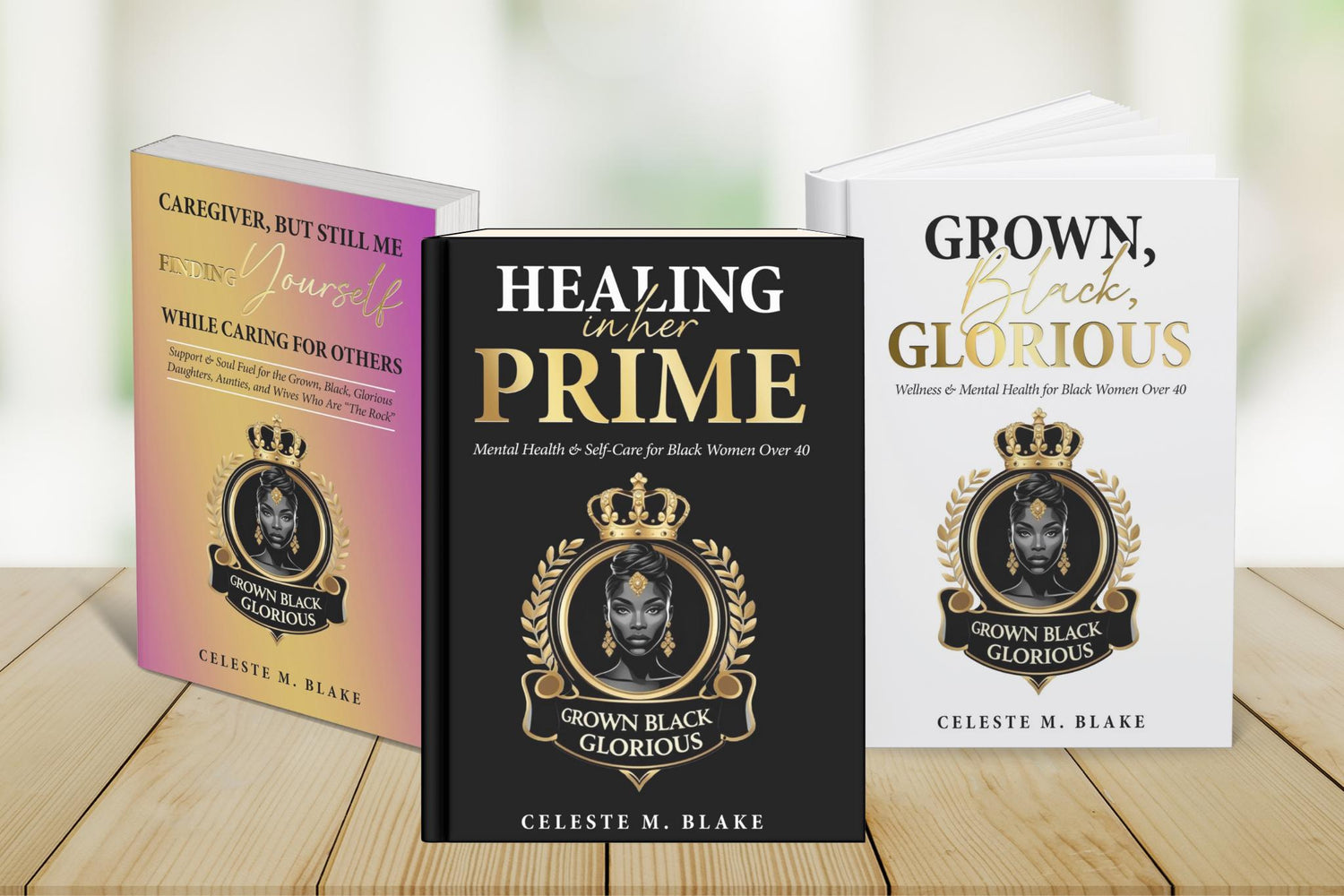
If you want a structured emotional self-care practice with prompts built for your actual life, the Self-Care Journal Bundle for Black Women 40+ was designed for exactly this. Preview the first 10 pages free.
Supporting Resources:
Self-Care Journal Bundle for Black Women 40+ - A daily practice for women who need their emotional life to have somewhere to go besides their body.
Healing in Her Prime - For Black women in midlife who are ready to stop managing everyone else's feelings and start witnessing their own.
The Black Woman's Complete Guide to Emotional Healing in Midlife - Because emotional self-care and emotional healing are not the same thing but they work together.
A Note Before You Go, Sis
This space was built with love, intention, and you in mind. Everything shared here, the reflections, the tools, the practices, the stories, is offered for educational and inspirational purposes only. It is not medical advice, psychological treatment, psychiatric care, or therapy, and it is not intended to replace any of those things.
I am not a licensed mental health professional, medical doctor, psychologist, psychiatrist, or therapist. Nothing on this site creates a professional relationship between us, and nothing here should be treated as a clinical assessment, diagnosis, or treatment plan for any condition.
If you are moving through severe emotional pain or carrying trauma that feels too heavy to hold, you deserve more than words on a screen. You deserve a trained professional in your corner, someone who can see you fully and care for you personally. Please reach out to a qualified mental health or medical provider. That is not a detour from your healing. That is the healing.
By engaging with this content, you agree that it is provided for informational and inspirational purposes only. You take full responsibility for how you engage with and apply what you find here, and for seeking professional clinical care when your situation requires it.
You are not alone. And you are worth every resource available to you, including the professional ones.

With intention and belief in your growth,