

High-functioning burnout in Black women does not look like falling apart.
It looks like holding it together.
You are still productive. Still dependable. Still the one people call.
But underneath that competence is emotional exhaustion that never fully resets.
If you are a Black woman over 40 and you feel constantly responsible, constantly needed, and quietly depleted, you may not be just tired. You may be operating inside emotional patterns that once protected you but now keep you stuck.
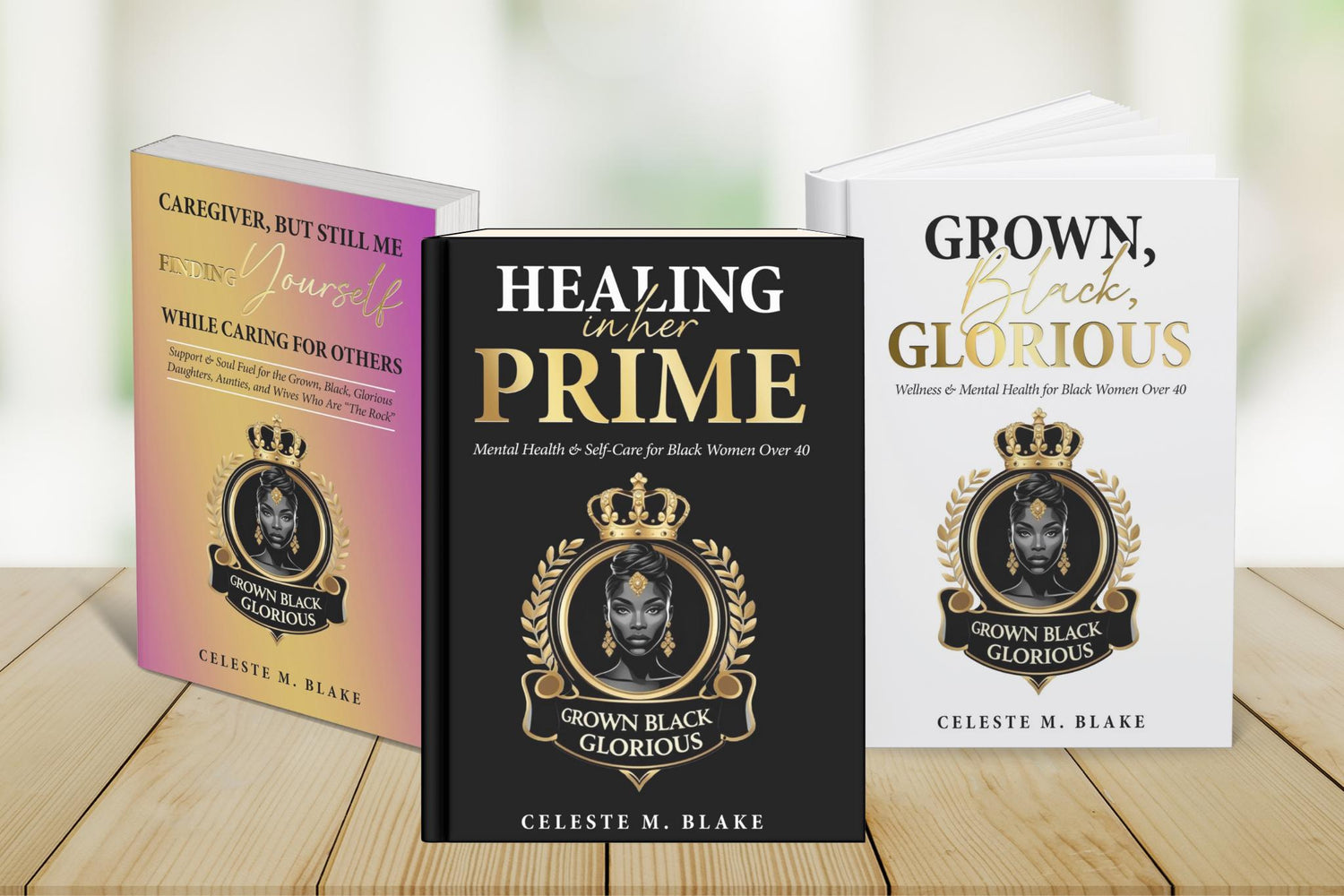
In my complete guide to Strong Black Woman Burnout, I explain how this conditioning develops over time and what recovery actually requires.
👉 Strong Black Woman Burnout: The Complete Recovery Guide for Black Women Over 40
Because burnout is not always dramatic. Sometimes it is disciplined. Sometimes it is dressed up as maturity.
And that is why it is so hard to name.
What Is High-Functioning Burnout
High-functioning burnout is emotional depletion hidden behind capability.
You do not collapse.
You compensate.
You do not shut down.
You push through.
You tell yourself you are just tired, just busy, just in a season. Meanwhile your body stays tense, your patience shortens, and your joy fades in ways you cannot quite explain.
For many Black women, especially in midlife, strength was never optional. It was modeled. Praised. Expected.
Be strong.
Do not complain.
Handle it.
So you did.
And you became excellent at it.
The problem is that endurance, when left unchecked, slowly turns into erosion.
Emotional Pattern 1: Over-Responsibility
You feel responsible for things that were never assigned to you.
This invisible responsibility is often part of what psychologists call the mental load, the constant cognitive tracking of everyone’s needs and responsibilities. If you want to understand how this operates inside relationships and families, read Mental Load in Relationships: Why Women Carry the Emotional Map.
You notice the mood shift in a room and immediately try to fix it. You sense tension in a relationship and step in before anyone asks. You carry the emotional weight of situations that technically belong to other adults.
It feels loving. It feels loyal.
But it is exhausting.
Because when you believe everything depends on you, you never truly rest. Even in silence, your mind is scanning. Anticipating. Planning.
And if something goes wrong, you replay it in your head, wondering what you missed.
That constant vigilance wears you down slowly. Not in one dramatic moment, but in a thousand small ones.
Emotional Pattern 2: Emotional Over-Functioning
In your relationships, you are the stabilizer.
You start the difficult conversations. You repair the misunderstandings. You smooth over the rough edges.
You apologize first, even when you are not fully wrong, because peace matters more than ego.
And if you do not take initiative, nothing moves.
Over time, this creates an invisible imbalance. You are carrying the emotional labor for two people. You are translating feelings, managing reactions, predicting conflicts.
It becomes second nature.
But second nature does not mean sustainable.
And the resentment you do not allow yourself to feel does not disappear. It settles quietly under the surface.
Emotional Pattern 3: Guilt-Based Boundaries
You decide you are tired. You finally say no.
And immediately, guilt rushes in.
You explain yourself. You soften your tone. You add extra kindness to make the no feel smaller.
Sometimes you even reverse the decision, just to make the discomfort stop.
Many Black women were taught that love is measured by sacrifice. That being good means being available. That reliability equals value.
So when you protect your time, it feels wrong.
But guilt does not mean you made a mistake. It means you are interrupting a pattern that has been running for years.
And interruption always feels uncomfortable at first.
Emotional Pattern 4: Self-Abandonment Disguised as Strength
This one is subtle.
You skip meals because you are busy. You ignore headaches because there is work to do. You silence your own disappointment because someone else is having a harder day.
You tell yourself you will deal with it later.
Later rarely comes.
You become skilled at overriding yourself. Your needs shrink in importance. Your feelings get postponed. Your exhaustion gets minimized.
From the outside, it looks like resilience.
On the inside, it feels like distance. Distance from your body. Distance from your own voice.
One day you pause and realize you do not even know what you want anymore.
Not because you never had desires, but because you stopped consulting them.
Emotional Pattern 5: Identity Tied to Usefulness
This is the deepest layer.
You are not just helpful. You are the helper.
Your worth has been shaped by how much you carry. How much you provide. How little you need.
Rest feels indulgent. Receiving help feels uncomfortable. Saying I cannot feels like betrayal.
So you keep proving your strength through endurance.
But if your identity requires exhaustion to stay intact, something has to shift.
Because strength is not supposed to cost you your aliveness.
Why These Patterns Keep You Stuck
None of these patterns developed by accident.
They protected you. They earned you praise. They helped you survive seasons that required grit.
But what kept you safe in one chapter may quietly trap you in the next.
High-functioning burnout is not about weakness. It is about outdated strategies that no longer fit who you are becoming.
Until you name them, you will continue repeating them, wondering why you are so tired.
This Week’s Action Step: From Reflection to Movement
Reading this and recognizing yourself in it matters.
But awareness becomes change only when you move differently.
This week, choose one small action. Just one.
Not a life overhaul. Not a personality shift. One deliberate interruption of the pattern.
Maybe it is saying no without explaining.
Maybe it is taking thirty minutes for yourself without guilt.
Maybe it is telling the truth about how you actually feel.
Maybe it is delegating something you normally carry alone.
Write it down.
Choose the day.
And keep the promise to yourself quietly.
You do not need an audience. You do not need approval. You do not need to feel ready.
Small boundaries rebuild identity.
Small pauses rebuild nervous systems.
Small acts of self-loyalty rebuild lives.
You are not trying to become someone new.
You are remembering who you were before exhaustion became your personality.
Frequently Asked Questions
What is high-functioning burnout in Black women
It is emotional exhaustion hidden behind competence, responsibility, and productivity.
Why is it harder to recognize
Because many Black women were conditioned to equate strength with endurance, making depletion feel normal.
Is this the same as depression
Burnout and depression can overlap, but burnout often centers around chronic over-responsibility and emotional strain.
What is the first step toward recovery
Identify the emotional pattern you repeat most often and interrupt it with one small boundary or pause.
Your Next Step
Many women discover that the hardest part of recovery is not awareness, it is creating a place to process what they have been carrying for years. Structured reflection helps interrupt the patterns described above. If you recognized yourself in these patterns and you are ready to stop disappearing into responsibility, begin structured recovery here:
A Note Before You Go, Sis
This space was built with love, intention, and you in mind. Everything shared here, the reflections, the tools, the practices, the stories, is offered for educational and inspirational purposes only. It is not medical advice, psychological treatment, psychiatric care, or therapy, and it is not intended to replace any of those things.
I am not a licensed mental health professional, medical doctor, psychologist, psychiatrist, or therapist. Nothing on this site creates a professional relationship between us, and nothing here should be treated as a clinical assessment, diagnosis, or treatment plan for any condition.
If you are moving through severe emotional pain or carrying trauma that feels too heavy to hold, you deserve more than words on a screen. You deserve a trained professional in your corner, someone who can see you fully and care for you personally. Please reach out to a qualified mental health or medical provider. That is not a detour from your healing. That is the healing.
By engaging with this content, you agree that it is provided for informational and inspirational purposes only. You take full responsibility for how you engage with and apply what you find here, and for seeking professional clinical care when your situation requires it.
You are not alone. And you are worth every resource available to you, including the professional ones. 💜

With warmth and faith in your journey,
Celeste M Blake
Founder of Grown Black Glorious
Creator of Black Men in Partnership - an initiative of Grown Black Glorious