

Sis, let me ask you something.
When was the last time you sat down and your mind actually went quiet?
Not distracted quiet. Not scrolling quiet. Actually quiet.
If you had to think about it, this post is for you.
Because there is a good chance that what you are carrying every single day has a name. It is called the mental load, and for many Black women it runs deeper than most people realize.
The mental load is the invisible work of remembering, planning, anticipating, and holding everything together long before anyone else notices something needs to be done.
Today we are naming it. Because once you name the weight you have been carrying, you can finally begin to understand why you feel exhausted even when life looks stable from the outside.
This conversation connects directly to the deeper reflection explored in Strong Black Woman Burnout: Reclaiming Your Identity Beyond Roles, where we talk about how many women slowly lose themselves inside responsibility.
What Emotional Labor Actually Looks Like
You already know what it feels like to manage everyone else's emotions while quietly setting your own aside.
You soften your tone so a meeting does not escalate.
You smile through comments that should never have been made.
You absorb tension in a room so everyone else stays comfortable.
That is emotional labor.
And Black women have been doing it in double shifts for generations.
Emotional labor is not simply kindness. It is the invisible work of monitoring how others feel, adjusting your behavior to stabilize situations, and translating yourself so that the people around you remain comfortable.
Over time this becomes automatic.
You become the emotional anchor in rooms, families, and relationships.
But your nervous system keeps track of every moment you suppress your own needs in order to manage someone else's emotions.
Eventually the body sends signals that something is wrong.
Those signals are often the earliest signs of burnout, something explored in depth in Strong Black Woman Burnout: The Complete Recovery Guide.
Why High Functioning Women Feel Constantly Tired
Many women who carry the mental load describe the same experience.
They are capable.
They are responsible.
They are dependable.
And they are exhausted.
This exhaustion is not laziness or lack of motivation. It is the cognitive pressure of managing the invisible systems that keep families, workplaces, and relationships running.
The mental load means remembering everything.
Appointments.
Responsibilities.
Emotional dynamics.
Future problems that might happen if something gets missed.
Even when your body is resting, your mind is still running the checklist.
High functioning women are often praised for this capacity. They are called strong, reliable, and capable.
But praise does not lighten the weight of constant responsibility.
Over time the pressure builds quietly.
Many women first begin recognizing the pattern through signs described in Strong Black Woman Burnout Symptoms Most Women Ignore, where exhaustion hides behind competence.
The Hidden Cognitive Work of Caregiving
Now add caregiving to everything we just talked about.
Supporting children.
Helping aging parents.
Holding emotional space for siblings.
Supporting partners who rely on your stability.
Caregiving multiplies the mental load because it requires constant awareness of another person's emotional and practical needs.
You remember things others forget.
You anticipate problems before they appear.
You carry concerns for people you love long after the conversation is over.
For many Black women this responsibility is cultural as well as emotional. We are often raised to be pillars of support in our families and communities.
We show up because we care.
But caregiving without boundaries slowly drains emotional and cognitive energy.
Over time the mental load becomes identity. The responsible one. The strong one. The one everyone depends on.
Many women eventually realize that the role of emotional anchor slowly replaced their identity. The Emotional Cost of Being the Strong One explores how that responsibility develops and why it becomes so difficult to step away from.
And the woman behind those roles slowly disappears.
How Mental Load Leads to Burnout
Mental load does not simply create tiredness.
Left unchecked, it becomes burnout.
Burnout develops quietly.
Too many days where you give more than you receive.
Too many moments where your needs come last.
Too many responsibilities with no real recovery.
You might notice your patience disappearing faster.
Things that once brought joy now feel heavy.
Sleep no longer restores your energy.
Many Black women experience burnout invisibly because they have learned to perform strength even when they are exhausted.
They continue showing up for everyone else while slowly running on empty.
Recognizing this pattern is not weakness. It is clarity.
And clarity is always the first step toward change.
You Were Not Meant to Carry This Alone
Everything we talked about today is real.
The invisible mental labor.
The emotional responsibility.
The pressure to hold everything together.
But naming the weight changes how you relate to it.
You begin to understand that the exhaustion you feel is not failure.
It is a signal that you have been carrying too much for too long.
You are not broken.
You are not weak.
You are a woman who has been showing extraordinary strength for a very long time.
And strength deserves support.
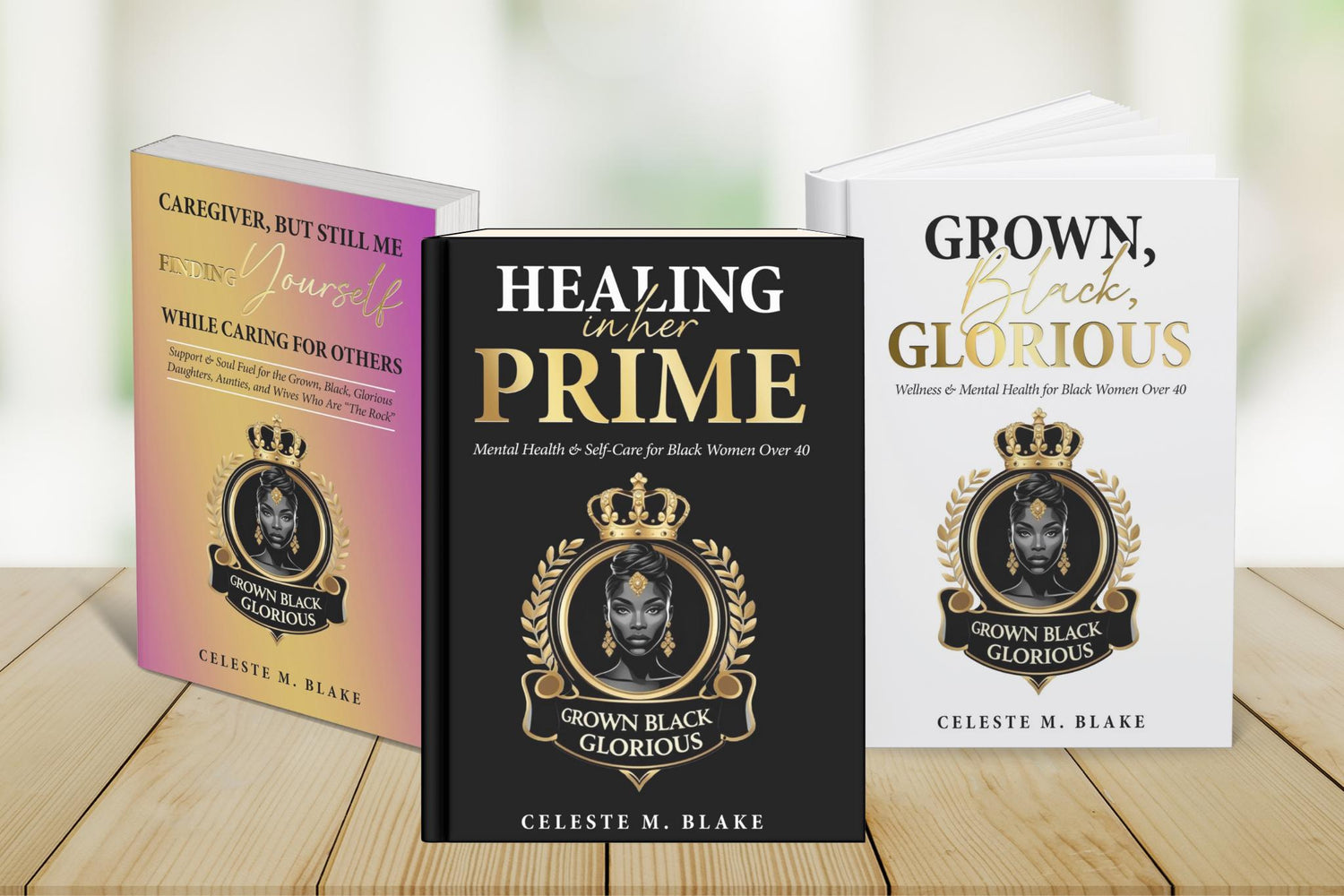
If this conversation resonated with you, Caregiver But Still Me was written for women navigating exactly this season of responsibility and identity.
A Note Before You Go, Sis
This space was built with love, intention, and you in mind. Everything shared here, the reflections, the tools, the practices, the stories, is offered for educational and inspirational purposes only. It is not medical advice, psychological treatment, psychiatric care, or therapy, and it is not intended to replace any of those things.
I am not a licensed mental health professional, medical doctor, psychologist, psychiatrist, or therapist. Nothing on this site creates a professional relationship between us, and nothing here should be treated as a clinical assessment, diagnosis, or treatment plan for any condition.
If you are moving through severe emotional pain or carrying trauma that feels too heavy to hold, you deserve more than words on a screen. You deserve a trained professional in your corner, someone who can see you fully and care for you personally. Please reach out to a qualified mental health or medical provider. That is not a detour from your healing. That is the healing.
By engaging with this content, you agree that it is provided for informational and inspirational purposes only. You take full responsibility for how you engage with and apply what you find here, and for seeking professional clinical care when your situation requires it.
You are not alone. And you are worth every resource available to you, including the professional ones. 💜

With warmth and faith in your journey,
Celeste M Blake
Founder of Grown Black Glorious
Creator of Black Men in Partnership - an initiative of Grown Black Glorious