

You slept. You rested. You took the weekend off. So why do you still feel like something inside you is broken?
There is a conversation that happens quietly in the minds of Black women all over this country, and it usually sounds something like this: I just need to get through this week. I just need one good night of sleep. I just need a break and then I'll be fine.
And then the break comes. And you are still not fine.
Not because you are broken. Not because something is medically wrong. But because what you are carrying is not tiredness. It is burnout. And burnout does not respond to rest the way fatigue does, because burnout is not about your body running low on energy. It is about your entire system running low on meaning, capacity, and self.
Understanding the difference between burnout vs tiredness is not a semantic exercise. It is a survival skill. Because if you keep treating burnout like fatigue, you will keep reaching for solutions that cannot solve the actual problem. You will sleep eight hours and wake up depleted. You will take a vacation and return feeling exactly the same. You will push harder, rest less, and wonder what is wrong with you.
Nothing is wrong with you. You just need the right map.
If you are realizing that what you are experiencing may be deeper than simple fatigue, the full burnout pattern is explained in Strong Black Woman Burnout: Reclaiming Your Identity Beyond Roles.
This post is going to give you that map. We are going to break down what separates physical tiredness from emotional exhaustion, why rest is necessary but not sufficient for burnout recovery, what the mental weight of burnout actually looks and feels like, and what happens when burnout is left unaddressed long enough to become chronic.
If you have been trying to figure out why you feel so far from yourself even when your life is objectively manageable, keep reading.
Physical Fatigue vs Emotional Exhaustion
Let's start with the most fundamental distinction, because everything else builds on it.
Physical fatigue is a biological response to exertion. You used your body, your brain, your nervous system. They need recovery time. You sleep, you rest, you eat well, and the reserves refill. It is a system doing exactly what it was designed to do. Fatigue, in this sense, is not a crisis. It is feedback. Your body telling you to pause, and then recharging when you do.
Emotional exhaustion operates on an entirely different plane.
Emotional exhaustion is the depletion of your inner resources, the part of you that generates motivation, empathy, patience, hope, and the capacity to keep caring about things. It does not refill with sleep. It does not reset with a long weekend. It accumulates over time through chronic stress, relentless emotional labor, the constant suppression of your own needs, and the ongoing effort of performing strength and stability for a world that depends on you to hold it together.
Many women begin recognizing this pattern when they realize they feel emotionally depleted even though nothing in their life looks obviously wrong. In Why Black Women Feel Emotionally Drained Even When Life Looks Stable, we explore why burnout often develops quietly beneath the surface long before it becomes visible to others.
Think of it this way. Physical fatigue is like a phone battery draining to zero. You plug it in, it charges back up, and it works as expected.
Emotional exhaustion is like a phone battery that has been drained to zero so many times without proper recovery that the battery cells themselves are damaged. You plug it in. It charges to forty percent. Then it stops. You unplug it, it drains faster than it should. And over time, it stops holding a charge at all.
That is what chronic emotional depletion does to your interior capacity.
For Black women specifically, emotional exhaustion vs fatigue carries an additional layer of complexity because the emotional labor load is rarely optional. You are not choosing to carry it in the way you might choose to train for a marathon. It is structural. It is relational. It is cultural. It is the invisible tax built into being a Black woman navigating family, workplace, community, and a society that has historically demanded more from you while offering less in return.
You are not just tired from today. You are tired from years of being the one who absorbs, manages, and carries without adequate replenishment. That is not fatigue. That is a system in genuine distress.
Fatigue is temporary. Burnout is cumulative.
And it compounds.
Why Rest Alone Does Not Fix Burnout
This is the part that frustrates people most. Because we are told repeatedly that the solution to being tired is rest. And that is true for fatigue. But burnout is categorically different.
Here is what is happening beneath the surface when burnout takes hold.
Your body's stress response system, designed to mobilize you for short term threats, has been running in elevated mode for an extended period. Stress hormones disrupt sleep, immune function, digestion, and mood regulation. Your nervous system gets stuck in a chronic activation state.
You are not in crisis mode exactly. You are just never fully at ease.
In this state, rest becomes less restorative than it should be. You can sleep eight hours and wake up unrefreshed because your nervous system did not fully discharge during the night. You can take a vacation and return feeling almost immediately like you never left.
The environment is the same. The demands are the same. The patterns are the same.
And your system knows it.
This is exactly why the recovery framework in Strong Black Woman Burnout: The Complete Recovery Guide focuses on rebuilding identity, boundaries, and emotional restoration, not just adding more rest.
Rest creates the window. Recovery rebuilds the system.
The Mental Weight Behind Burnout
If the body's depletion is one dimension of burnout, the mental dimension is what makes it so stubborn and so hard to communicate.
High functioning burnout symptoms are often invisible from the outside because the mental weight does not shut you down. It slows you down. It dims you.
You are still operating. Still producing.
But doing so through a fog nobody else can see.
Your mind runs constant inventory.
What needs to happen today.
What you forgot yesterday.
What someone needs from you.
What might go wrong next week.
There is no mental quiet.
Burnout also brings decision fatigue. Small decisions feel heavy. You reread emails three times. You stand in front of your closet and feel overwhelmed.
This is not laziness.
This is a depleted system struggling to allocate its remaining energy.
Burnout also creates the weight of deferred self.
The conversation you keep postponing.
The boundary you know you need to set.
The version of yourself you keep promising to return to once things calm down.
That deferral has weight.
It accumulates.
When Burnout Becomes Chronic
Left unaddressed, burnout progresses through stages.
Chronic burnout occurs when depletion becomes the body's new normal.
You stop imagining things getting better. Not dramatically. Quietly.
The future begins to look like more of the same.
Physical symptoms persist. Sleep disruption. Tension. Digestive issues. Constant fatigue.
Joy becomes harder to access. You attend the celebration and feel disconnected. You receive good news and feel nothing.
You are present but distant.
This is a signal your system needs structured recovery.
Tired Can Be Fixed with a Nap. Burned Out Needs a Map.
The most important takeaway is strategy.
If you treat burnout with tired solutions, you stay stuck.
Burnout is not a character flaw. It is the predictable result of sustained output without restoration.
You deserve more than a nap.
You deserve recovery.
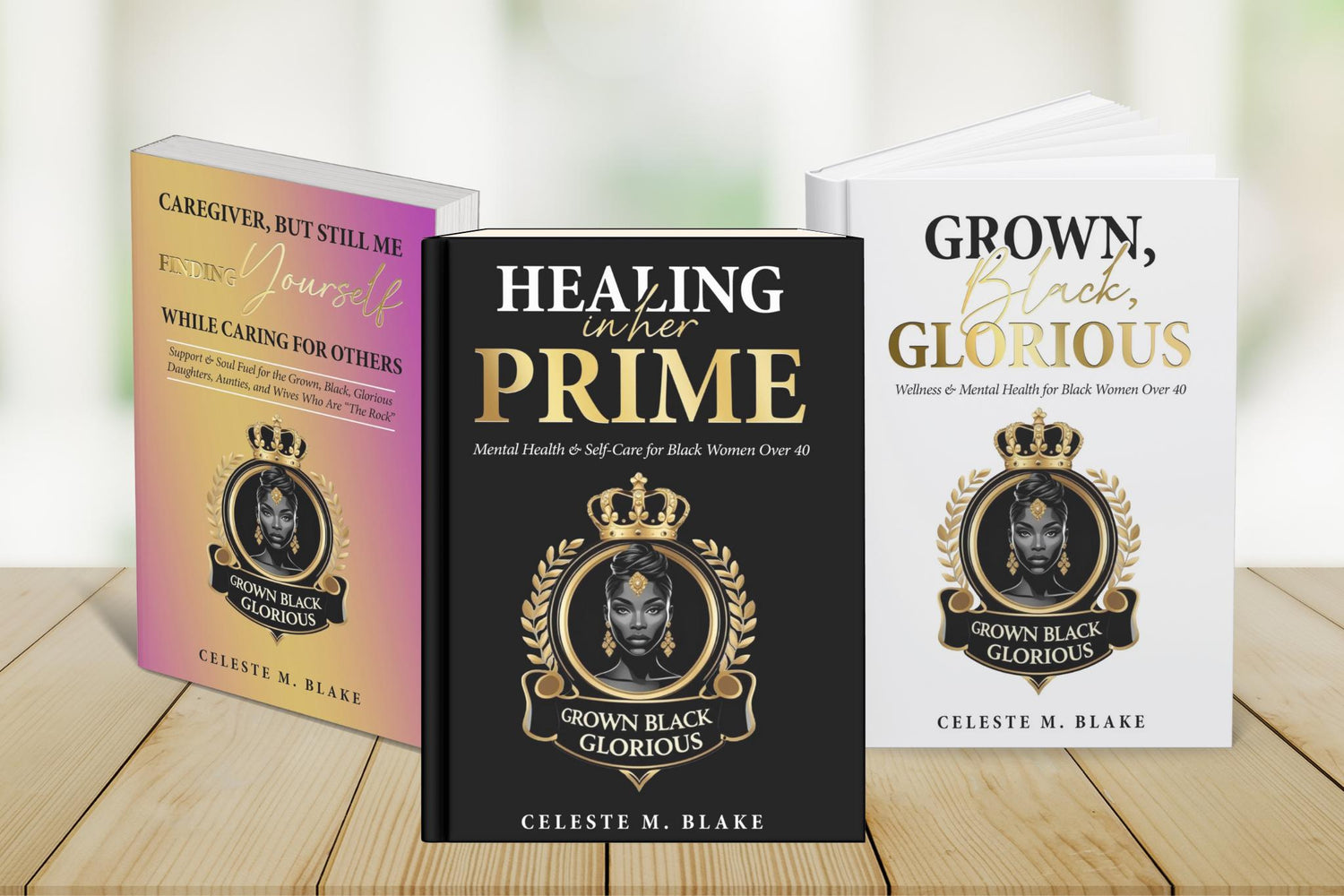
If you are ready to begin rebuilding your energy and reconnecting with yourself, Healing in Her Prime offers a gentle starting point for women navigating emotional exhaustion and midlife renewal.
Because healing is not destruction.
It is reconstruction.
And you have always been exceptional at building things.
Now it is time to rebuild yourself.
A Note Before You Go, Sis
This space was built with love, intention, and you in mind. Everything shared here, the reflections, the tools, the practices, the stories, is offered for educational and inspirational purposes only. It is not medical advice, psychological treatment, psychiatric care, or therapy, and it is not intended to replace any of those things.
I am not a licensed mental health professional, medical doctor, psychologist, psychiatrist, or therapist. Nothing on this site creates a professional relationship between us, and nothing here should be treated as a clinical assessment, diagnosis, or treatment plan for any condition.
If you are moving through severe emotional pain or carrying trauma that feels too heavy to hold, you deserve more than words on a screen. You deserve a trained professional in your corner, someone who can see you fully and care for you personally. Please reach out to a qualified mental health or medical provider. That is not a detour from your healing. That is the healing.
By engaging with this content, you agree that it is provided for informational and inspirational purposes only. You take full responsibility for how you engage with and apply what you find here, and for seeking professional clinical care when your situation requires it.
You are not alone. And you are worth every resource available to you, including the professional ones.
Now, let’s get back to the good stuff: your peace, your recovery, your joy. 💜
Your story continues…

With Truth, Tenderness & Intention,