

Nobody prepares you for the grief that does not come with a reason anyone else can see.
Nobody brings you flowers for it. Nobody checks in after a week to ask how you are holding up. There is no casserole dish left on your porch, no card signed by coworkers, no ritual that says: what you lost was real, and you are allowed to mourn it.
But it is a loss just the same.
For so many Black women, the grief midlife Black woman carries is not the kind the world recognizes. It is not the death of a person or the end of a marriage, though those can be part of it. It is something quieter and in some ways more disorienting: the slow, creeping awareness that the life you spent decades working toward, waiting for, praying about, planning in the margins of spiral notebooks, is not the one you are living.
You are forty-something. You have done so much right. And still, something aches.
That ache has a name. It is grief. And it deserves the same care you would give any other loss.
Naming the Grief That Lives Under the Accomplishments
A lot of us get here, to this specific kind of midlife reckoning, and spend months, sometimes years, refusing to call it what it is. Because from the outside, everything looks fine. Better than fine. You have built a life. You have things to show for your effort. Who are you to grieve when other people have it harder?
That question right there is how letting go expectations Black woman becomes nearly impossible. Because we were raised in a tradition that measures suffering on a sliding scale, and somewhere at the top of that scale lives the permission to feel bad. To really feel it. And most of us have never quite believed we qualify.
But grief is not a competition. And the losses that never get named do not disappear. They go underground.
They show up as irritability when you cannot explain why you are short-tempered with people you love. They show up as the flatness behind eyes that are technically fine, technically grateful, technically managing. They show up as the strange hollowness of a Sunday afternoon when nothing is wrong and yet something feels profoundly missing. They show up in the 3am thoughts you shoo away because you have to be rested for tomorrow.
That is not ingratitude. That is grief doing what grief does when it has no container: it leaks.
Naming it is not dramatic. It is not self-pity. It is the first honest thing you can do for yourself in years. Not everything you feel has to be explained or justified before you are allowed to feel it. Some things just get to be true.
You expected a different life. You are allowed to grieve the distance between what you imagined and what arrived.
What Black Women in Midlife Are Actually Grieving
The list is longer than anyone talks about. And if you find yourself nodding at things on this list, know that you are not alone, not even close.
Grieving unfulfilled dreams Black women carry include the relationship that was supposed to look different by now. The marriage that did not happen, or the one that happened and then unraveled. The children you thought you would have, or the relationship with the children you do have that does not look like what you hoped. The career that promised one thing and delivered another. The version of yourself in your 20s who was so certain, so capable, so full of forward momentum, and the quiet grief of not being her anymore, even though you are so much more now.
There is grief for the body that changed faster than you were ready for. Grief for the friendships that quietly dissolved during years when everyone was too busy to maintain them. Grief for the version of your mother you never got, or the version of your daughter you hope she still might become. Grief for the time lost in relationships that took more than they gave. Grief for the dreams you set down because someone needed you to be practical, and you complied, and you never quite picked them back up.
Grief for the softer life you always said you would get to eventually. When the kids were older. When the job settled. When things calmed down. And now you are here, and it has not calmed down the way you thought it would, and eventually keeps moving further out.
Some women are grieving a city they left, an identity they outgrew, a faith they had to evolve beyond, a cultural expectation that cost them something they did not fully choose to give. Some are grieving versions of themselves that were not allowed to exist at the time: the creative, the tender one, the one who needed more than she was supposed to.
None of this is small. All of it is real. And the complete emotional healing guide for Black women will show you that grief is not a detour from healing. It is a stage of it. One of the most necessary ones.
Are You Tired of Being the Strong One?
You have been holding more than anyone knows. This workbook was made for exactly where you are right now.
Download: I Am So Tired of Being Strong A Free 5-Page Healing Workbook for Black Women Over 40
Why This Grief Gets Dismissed and Why That Makes It Worse
Here is the part that compounds everything: this specific grief, the grief midlife Black woman carries about the life she expected, is one of the least validated kinds of loss in our culture.
People do not know how to respond to it. It does not fit neatly into a sympathy card. There is no clear inciting event, no date to mark on the calendar as the beginning of the loss. And so when it surfaces, it tends to get met with one of several responses that are meant to help and instead land like small dismissals.
You are told to be grateful for what you have. As if gratitude and grief cannot occupy the same heart at the same time. As if naming a loss automatically means you do not appreciate what remains.
You are told you still have time. Which is sometimes true and sometimes beside the point, because some of what you are grieving cannot simply be rescheduled. A decade of your 30s that looked different than you wanted. The years your children were small and you were too depleted to be as present as you needed to be. Those things are not recoverable by optimism. They are losses with real edges.
You are told, usually with the best intentions, that everything happens for a reason. And maybe you believe that. But even if you do, it does not mean the loss did not hurt. Meaning and pain are not mutually exclusive.
And then there is the layer specific to us. Black women are not culturally permitted to be publicly undone by this kind of grief. We are the ones who hold together. We are the ones who keep going. We are the ones who do not fall apart over something that is not, technically, a tragedy.
So the grief goes inward. It becomes shame. It becomes the quiet suspicion that you are ungrateful or broken or too sensitive. It becomes the reason you do not say what is actually wrong when someone asks how you are doing.
This is why understanding the full arc of the healing process matters so much. In the 7 Stages of Emotional Healing Every Black Woman Over 40 Goes Through, grief shows up not as a sign that something is wrong with you, but as confirmation that something in you is finally ready to heal. Dismissed grief does not dissolve. It calcifies. It becomes the low-grade weight that makes everything harder without you being able to explain why.
Letting the grief be seen, even just by yourself, even just on paper, changes something. Not everything. But something.
How to Honor What Was Lost Without Getting Stuck in It
This is the part that frightens people most: what if I start grieving and I cannot stop? What if I open that door and it swallows me?
The fear is understandable. But midlife grief Black women over 40 carry has usually been compressed and postponed for so long that the body is already working overtime to contain it. The grief that frightens you is the grief you have been managing, not the grief you let yourself feel. The version you actually allow tends to be more bearable than the version you keep sealed.
Honoring what you lost does not mean living there. It means giving it the acknowledgment it never received, and then, when you are ready, loosening your grip.
Here is what that can look like:
Write it down without editing yourself. Not a journal entry designed to resolve something. Not a gratitude list. Just the unfiltered truth of what you thought your life would look like and what you actually got. Let the distance between those two things be visible on the page. You do not have to do anything with it yet.
Name the specific losses, not just the general feeling. Grief is easier to move through when it has a shape. "I am sad about my life" is vast and swallowing. "I am grieving that I did not have children" or "I am grieving the career I gave up to take care of everyone else" or "I am grieving the version of myself who still believed the world would meet her fairly", those are real things that can be held and eventually honored.
Give yourself a ritual. Grief needs a container. A candle lit for what was lost. A letter written and then burned or buried. A walk taken specifically for the purpose of acknowledging something. Our ancestors understood that grief required ceremony. You are allowed to create one for losses the culture does not formally recognize.
Let someone else witness it. This does not have to be a therapist, though therapy is genuinely useful here. It can be a trusted friend, a sister circle, a journal read aloud to yourself. What matters is that the grief stops being only internal. Witnessed grief moves differently than grief carried alone.
Resist the pressure to resolve it quickly. You did not accumulate this loss in a week. It will not release in one. Healing is not linear, and grief that has been suppressed for years is allowed to take time. Give it the room it needs without demanding that it wrap itself up on a schedule.
Some losses deserve to be named before they can be released.
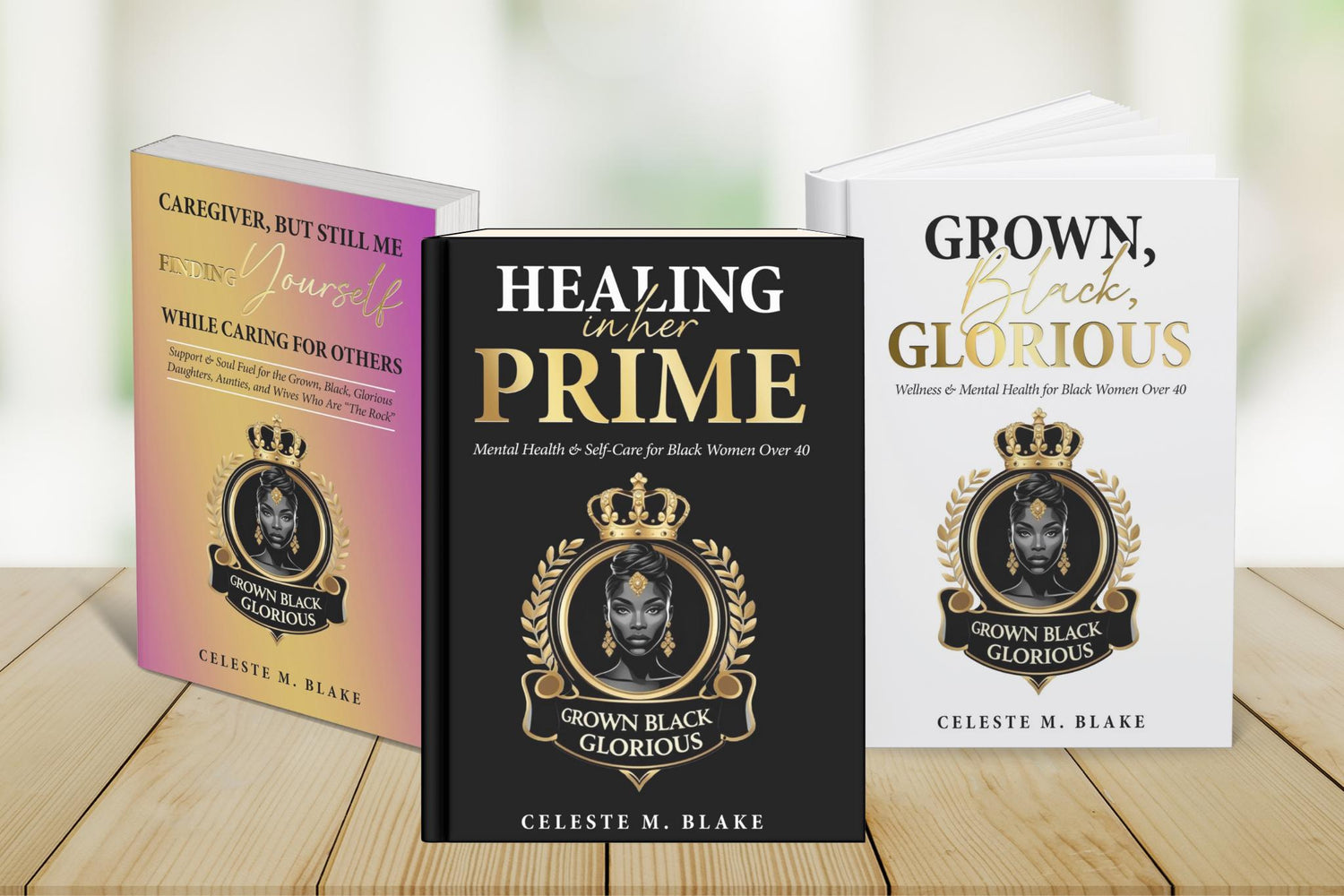
Healing in Her Prime includes a dedicated section on midlife grief, because the path through is not around. It is through. With the right support, you can move through it whole.
What Healing Looks Like After You Let Yourself Grieve
Here is what nobody tells you about grieving the life you expected: on the other side of it is something you were not anticipating. Not just relief, though there is that. Not just lightness, though there is that too. What most women find, when they finally let themselves grieve fully and without apology, is themselves.
The self that has been waiting underneath the performance. Underneath the management. Underneath the relentless forward motion that left no room for honest reckoning. When you stop spending so much energy keeping the grief contained, that energy becomes available for something else. Something yours.
Healing after grief does not mean the loss stops mattering. The dream you did not get to live still mattered. The relationship that did not become what you needed it to be was still real. The years spent in survival mode instead of something freer still happened. Healing means you stop being organized around the absence. You stop defining yourself primarily by what did not arrive.
You begin to ask a different question. Not why did I not get the life I planned, but what does the life I actually have make possible? Not as a consolation prize. Not as a forced reframe. As a genuine inquiry into what this specific life, with all its departures from the script, has given you that the scripted version never would have.
Some answers to that question will surprise you. Some will ache a little even as they illuminate. That is fine. Healing is not the absence of ache. It is the presence of yourself inside the ache, steady enough to stay with it, and curious enough to keep going.
This is where your healing journey begins in earnest. Not at the moment everything is resolved, but at the moment you decide the grief deserves your full, honest attention. When you are ready to take that step, begin your healing journey with a community and a framework built specifically for women who are ready to stop carrying what was never meant to be permanent.
The grief midlife Black woman carries is not weakness. It is the cost of having cared deeply about her own life. And the woman who is willing to grieve it fully is the same woman who is capable of building something true on the other side.
You have earned the right to mourn. And you have everything you need to heal.
Are You Tired of Being the Strong One?
This workbook was written for the woman who has been holding her grief in place of her peace. Five pages. Real prompts. No performance required.
Download: I Am So Tired of Being Strong. A Free 5-Page Healing Workbook for Black Women Over 40
Ready to go deeper? Healing in Her Prime was written for this exact season, the one where you are done pretending the grief is not there and ready to move through it with intention and care.
Also available: the Midlife Women's Self-Care Workbook, affirmations, stress relief, and journaling prompts for the woman who is learning to tend to herself with the same devotion she has always given to everyone else.
A Note Before You Go, Sis
This space was created with care, intention, and deep respect for the experiences many Black women carry. The reflections, stories, and tools shared here are offered for educational and inspirational purposes only.
They are not medical advice, psychological treatment, psychiatric care, or therapy, and they are not intended to replace the guidance of licensed professionals.
I am not a licensed medical provider, therapist, psychologist, psychiatrist, or mental health professional. The content on this site is meant to support reflection and personal growth, but it should not be used as a substitute for professional evaluation, diagnosis, or treatment.
If you are experiencing severe emotional distress, trauma, or mental health challenges, reaching out to a qualified healthcare or mental health professional is an important and supportive step. Professional care is not separate from healing, it is often a powerful part of it.
By engaging with this content, you acknowledge that it is shared for informational and inspirational purposes and that personal decisions about health, wellbeing, and care should always be made with the support of appropriate professionals when needed.
You deserve compassion, support, and every resource available to help you heal and grow.
---

With warmth and faith in your journey,