

If you have ever tried to start your healing journey and felt like you were pushing a boulder uphill with your bare hands, you are not imagining it. Emotional healing for Black women over 40 is genuinely harder than mainstream wellness content lets on. Not because something is wrong with you. Because something very specific is right about your context, and most healing spaces were not built with that context in mind.
This is not a post about what to do next. You will find that in the Complete Guide to Emotional Healing when you are ready for it. This is a post about why healing feels so hard in the first place, and why that difficulty is not a personal failure. It is a predictable outcome of everything you have been taught, expected, and required to be.
The Weight Black Women Carry Before Healing Even Begins
Before a Black woman over 40 can begin healing, she has to reckon with a weight that most people never see.
It is not just the responsibilities on her schedule. It is not just the demands from her family, her job, her community. It is the accumulated weight of years spent being the one who holds everything together, the one who does not fall apart, the one who figures it out even when no one asked her to and no one offered to help.
By the time many Black women reach their forties, they have spent decades absorbing emotional labor that was never formally assigned to them. They became the family mediator before they were old enough to drive. They became the dependable friend before anyone checked whether they were okay. They became the strong one at work because being anything else felt like a risk they could not afford.
That weight does not announce itself. It accumulates slowly, invisibly, until one day you realize you cannot remember the last time someone asked how you were doing and actually waited for the honest answer.
That is not a small thing to carry into a healing journey. It is an enormous thing. And acknowledging its size is the first honest step.
Why the Strong Black Woman Narrative Makes Healing Feel Like Weakness
There is a story that has been told about Black women for generations. It says that we are strong by nature. Unbreakable by design. That we were built for hardship and that difficulty does not affect us the way it affects others.
This story is not a compliment. It is a trap.
The strong Black woman syndrome does not just describe an expectation that others hold of Black women. It describes an identity that many Black women have quietly internalized as their own. When strength becomes identity, rest becomes betrayal. When endurance becomes proof of worth, needing help becomes evidence of failure. When holding it together becomes who you are, falling apart even a little becomes terrifying.
The healing journey for Black women is complicated by this exact dynamic. Because healing requires you to stop performing. It requires you to acknowledge what hurt you, what depleted you, what you needed and did not receive. And if your identity is built around not needing anything, that acknowledgment can feel like the most dangerous thing in the world.
This is why so many Black women in midlife can identify the moment they knew something was wrong long before they were able to do anything about it. The knowing is not the problem. The barrier is the belief, often deeply held and rarely examined, that addressing the wound makes you weak rather than wise.
If you recognize yourself in that pattern, you are not alone in it: Heal, Rise, and Reclaim Your Joy - Self-care and Healing for Black Women
How Generational Conditioning Blocks Emotional Healing for Black Women
The strong Black woman narrative did not begin with you. It was handed down.
Emotional healing for Black women over 40 is complicated by the reality that many of us learned our relationship with pain from women who had even less permission than we do to acknowledge theirs. Grandmothers who survived things they never named. Mothers who kept moving because stopping felt dangerous. Aunties who laughed instead of cried because crying was a luxury the circumstances could not accommodate.
These women were not teaching weakness. They were teaching survival. And for the conditions they were navigating, their strategies worked. But survival strategies and healing strategies are not the same thing. What gets you through a crisis is not always what allows you to live fully once the crisis has passed.
When you were raised watching the women around you absorb pain without processing it, you learned that this was how it was done. You learned that you did not talk about it. You did not dwell on it. You handled it and you moved on. And you carried that lesson into your forties, your fifties, your sixties, still handling, still moving, still not fully processed.
This is not dysfunction. This is inheritance. And like any inheritance, recognizing where it came from is what allows you to decide which parts of it you actually want to keep.
The Specific Barriers Black Women Over 40 Face on the Healing Journey
It would be convenient if the barriers to emotional healing were purely internal. If it were simply a matter of mindset shifts and willingness to do the work. But for Black women in midlife, the barriers are also structural, cultural, and deeply practical.
Black women mental health outcomes are shaped by factors that extend well beyond individual psychology. Access to culturally competent care has historically been limited. Black women have been more likely to have their pain minimized or mischaracterized by healthcare providers. The therapeutic relationship itself, which requires vulnerability and trust, can feel fundamentally unsafe when it has not historically been safe.
Beyond the systemic barriers, there are the daily ones. The Black woman over 40 who wants to prioritize her emotional health is often doing so while still carrying the full weight of her responsibilities. She does not have the luxury of a sabbatical. She cannot put everyone else on pause while she figures out her own interior landscape. The healing has to happen around the edges of a life that is still fully demanding her attention.
And then there is the loneliness of it. Because the strong Black woman narrative does not only affect how we see ourselves. It affects how our communities see us. People who love Black women often struggle to hold space for their vulnerability precisely because they are so accustomed to our strength. The woman who has always been the rock may find that when she finally needs support, the people around her do not know how to offer it and she does not know how to ask.
These are real barriers. Naming them is not an excuse. It is an accurate map of the terrain.
Why This Is Not Your Fault and What You Can Do About It
Here is what I want you to hold onto after reading all of the above.
None of it is your fault.
The weight you carry was placed on you by systems and stories that predated you. The strong Black woman conditioning was not something you chose. The generational patterns were not yours to create. The structural barriers are real and they are not a reflection of your worthiness or your willingness. You did not choose any of the conditions that make emotional healing for Black women over 40 harder than it should be.
What you do get to choose is what you do with that understanding.
Because here is the truth that lives alongside all of the above: knowing the terrain makes it navigable. Understanding why healing is hard does not make it impossible. It makes it honest. And honesty, in this context, is not discouragement. It is the beginning of something real.
The healing journey for Black women is not linear and it is not simple. But it is possible. And it is happening, right now, in women who are further along than they were a year ago, five years ago, a decade ago, because they refused to accept the narrative that needing to heal meant they had failed at being strong.
You are allowed to put down what you have been carrying. Not because you are weak. Because you are wise enough to know that no woman heals what she is still pretending does not hurt.
When you are ready to take the next step, Emotional Healing for Black Women Over 40: Where the Journey Actually Begins is waiting for you. Not to rush you. Just to be there when you arrive.
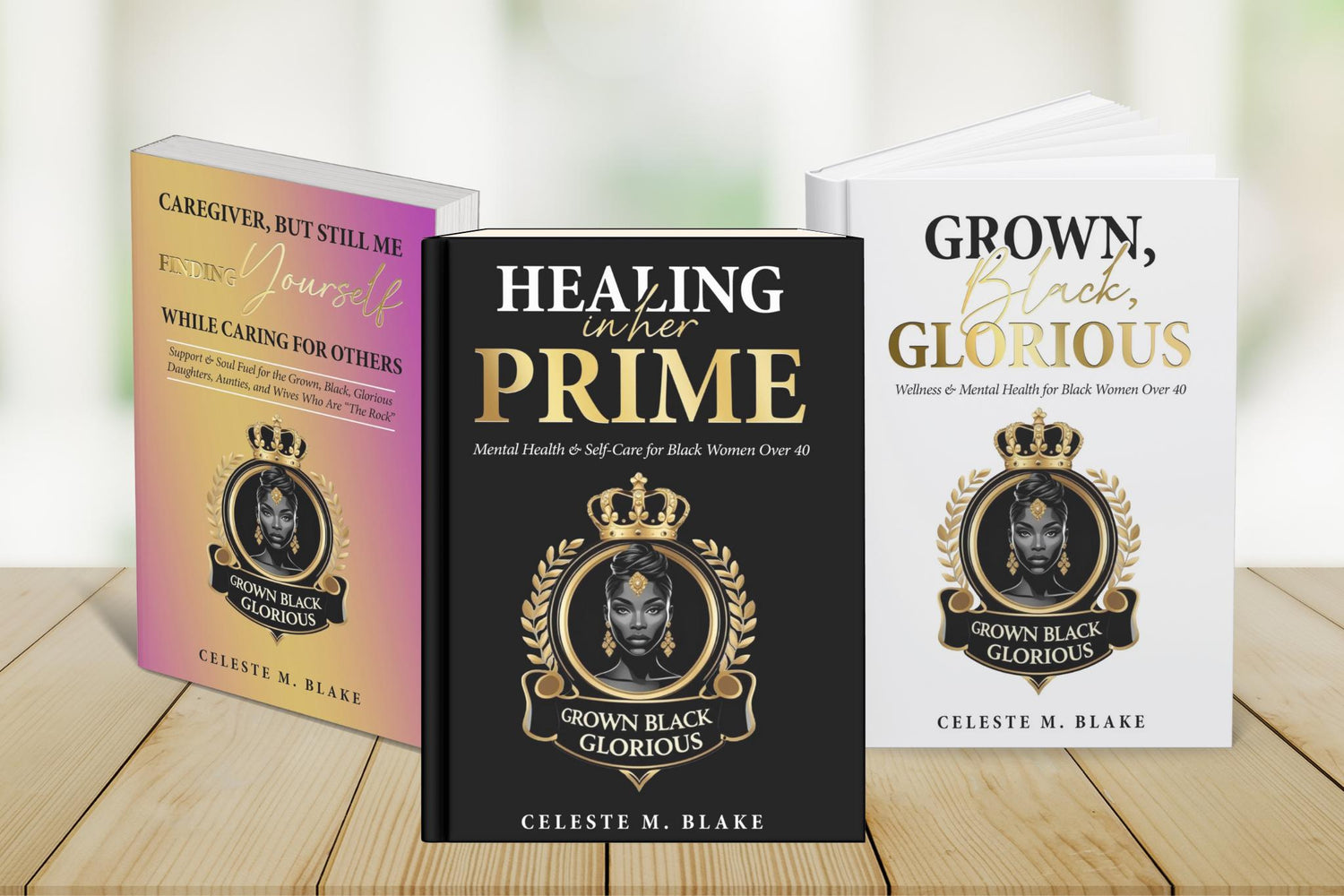
If you are looking for a structured companion for that journey, Healing in Her Prime was written for this exact moment. Not as a destination, but as a hand to hold while you find your footing.
A Note Before You Go, Sis
This space was created with care, intention, and deep respect for the experiences many Black women carry. The reflections, stories, and tools shared here are offered for educational and inspirational purposes only.
They are not medical advice, psychological treatment, psychiatric care, or therapy, and they are not intended to replace the guidance of licensed professionals.
I am not a licensed medical provider, therapist, psychologist, psychiatrist, or mental health professional. The content on this site is meant to support reflection and personal growth, but it should not be used as a substitute for professional evaluation, diagnosis, or treatment.
If you are experiencing severe emotional distress, trauma, or mental health challenges, reaching out to a qualified healthcare or mental health professional is an important and supportive step. Professional care is not separate from healing, it is often a powerful part of it.
By engaging with this content, you acknowledge that it is shared for informational and inspirational purposes and that personal decisions about health, wellbeing, and care should always be made with the support of appropriate professionals when needed.
You deserve compassion, support, and every resource available to help you heal and grow.
---

With warmth and faith in your journey,
Celeste M Blake
Founder of Grown Black Glorious
Creator of Black Men in Partnership - an initiative of Grown Black Glorious