

She did not leave on her own. You did not wake up one morning and decide to disappear. You were needed. You showed up. You kept showing up. And somewhere in the relentless accumulation of showing up for everyone else, the woman you were before all of this got buried so deep under responsibility that you forgot she was still there.
If you have ever whispered to yourself, I lost myself taking care of everyone, and you are a Black woman saying that in midlife, this letter is written directly to you. Not to the version of you that keeps it together. Not to the one who has learned to function through exhaustion so smoothly that no one ever thinks to ask if you are okay. To the one underneath all of that. The one who is tired in a way sleep cannot fix.
She is still in there. That is what this letter is about.
She Did Not Disappear. She Got Buried.
There is an important distinction between disappearing and being buried, and it matters more than it might seem right now.
If you disappeared, you would be gone. There would be nothing to recover, nothing to return to. But that is not what happened to most Black women navigating Black women midlife identity loss. What happened is that you got covered over. Layer by layer. Year by year. Role by role.
First came the layer of being the dependable one. The one your family called. The one who figured things out when no one else could. Then came the layer of partnership, or motherhood, or both. Then the career, the community, the church, the extended family. And over time, the weight of all those layers pressed down on who you were before any of it started.
She did not leave. She is underneath.
The distinction matters because buried things can be unearthed. What is buried can be brought back to the surface. It is harder work than anyone tells you it will be, and it takes longer than feels fair. But the woman you were before everyone needed you, the one with her own desires, her own curiosity, her own sense of what a good day felt like for her specifically, she is not gone.
She is waiting. And she has been patient with you for a very long time.
The Specific Weight That Buries Black Women in Midlife
Not all weight is the same weight.
There is a particular configuration of pressure that falls on Black women in midlife, and it is worth naming it specifically because unnamed weight feels like a personal failure. When you can see it clearly, when you can say this is what has been on top of me, it stops feeling like something wrong with you and starts feeling like something that happened to you. Those are not the same thing.
Losing yourself as a Black woman often happens through a combination of pressures that are cultural, familial, generational, and relational all at once. It is the expectation that you will hold your family together emotionally, even when you are falling apart. It is the inheritance of the Strong Black Woman narrative, the one that says your strength is infinite, your endurance is your identity, and asking for help is a luxury other people get. It is the sandwich generation reality that lands disproportionately on Black women: caring for aging parents while still raising or supporting children, while maintaining a career, while trying to sustain a partnership that may itself be depleted.
It is also the grief of what was never allowed. The dreams that got redirected because someone needed tuition money, or the family needed your income, or your ambitions were treated as secondary to someone else's stability. The creative life you set aside. The education you paused. The version of yourself that had ideas about what her own life would look like, and slowly, without ceremony, folded those ideas away.
This weight is not metaphorical. It has a texture and a timeline. And for many Black women, midlife is the first moment of enough stillness to actually feel it.
If you’ve been holding everything together for years, this is where you finally get to put some of it down.
You have been carrying this for a long time. This free workbook was written for the moment you are in right now, the moment when you are finally ready to set some of it down.
You don’t have to carry this version of your life into the next one.
Download your free healing workbook - I Am So Tired of Being Strong
A 5-page healing workbook for Black women over 40 who are ready to stop performing strength and start returning to themselves.
What It Looks Like When Responsibility Becomes Your Whole Identity
Here is something no one talks about clearly enough: there is a point at which responsibility stops being something you do and becomes something you are.
When you first stepped into the role of the dependable one, the caregiver, the problem solver, the one who holds things together, it was a choice, even if it did not always feel like one. But over years, over decades, the role calcifies. It becomes the answer to who are you. And when that happens, losing myself taking care of everyone as a Black woman stops being a phrase that describes an experience and becomes a description of an entire way of living.
You know it has happened when:
You feel vaguely guilty on the rare occasions when you do something just for yourself, as if joy without productivity is something you have not earned.
You have difficulty answering the question what do you want, not because you are being modest, but because you genuinely do not know. The machinery of your life has been so oriented toward what everyone else needs that your own wanting atrophied from disuse.
You get uncomfortable in stillness. When the house is quiet and no one needs anything and there is nothing urgent on your list, something in you gets restless or anxious, because stillness without a task feels unfamiliar. Like you do not know who you are when you are not being needed.
You have stopped having preferences about things that used to matter to you. What kind of music you like. What foods you actually enjoy when no one else's preferences are the deciding factor. What you would do with a free afternoon that was entirely, completely yours.
If this feels familiar, you’re not alone, and you don’t have to carry it like this forever. This is what happens to women who have been performing strength as a full time occupation for twenty or thirty years. The performance becomes the person, until something, or someone, or some quiet internal voice says: this is not all of who you are.
The Moment You Realize You Do Not Know Who You Are Anymore
For many Black women, this moment arrives sideways.
It is rarely a dramatic breakdown. More often it is something small. A question someone asks, what do you do for fun, and you realize you cannot answer it without pausing for an embarrassingly long time. Or a conversation with a friend who mentions a dream she is pursuing, and you feel a pang of something that is not quite envy but is related to it, a recognition of desire without a name attached. Or a quiet morning when the house is still and you sit with your coffee and think: I have been living this life for twenty years and I do not know if it is mine.
Reclaiming yourself as a Black woman over 40 often begins not with a plan, but with that moment of recognition. The moment you stop moving long enough to notice the gap between who you are performing and who you actually are.
It can feel disorienting. Even frightening. Because if responsibility has been your whole identity, then the question who am I without it can feel destabilizing rather than liberating. You might worry that wanting more for yourself means you are abandoning the people who need you. You might feel selfish for even sitting with the question.
You are not selfish. You are waking up.
And the woman who is waking up, the one who is noticing the gap, who is asking the uncomfortable question, who is sitting with the longing for something that belongs to her, she deserves the same quality of care you have given everyone else for the last two decades.
For a deeper look at why this moment of recognition is actually the starting point and not the problem, read why emotional healing feels harder for Black women over 40 and why that makes sense. It will put language to what you are experiencing.
How to Find Her Again Without Blowing Up Everything You Built
Here is what reclaiming yourself does not require: burning your life down.
You do not have to leave your marriage to find yourself. You do not have to quit your job, abandon your responsibilities, or stop being a mother or a daughter or a caregiver. What is buried does not need an explosion to be unearthed. It needs excavation, slow, intentional, patient excavation.
Emotional healing for Black women in midlife is not about becoming someone new. It is about recovering someone old. The woman who existed before the roles claimed her. She had a texture, a way of seeing the world, things she loved, ways of spending time that felt like hers. Some of those things are still accessible. Some of them will need to be rediscovered through experiment and curiosity. None of it requires that you abandon everyone who depends on you.
What it does require is the decision, quiet, private, non-negotiable, that you are going to stop treating your own needs as the last item on the list. Not the first item. Not at the expense of your genuine responsibilities. But not the last either.
It requires learning to tolerate the discomfort of being seen as slightly less available. The unease of saying I need some time for myself to people who have become accustomed to unlimited access to your energy. The strange feeling of prioritizing your own restoration and trusting that the world will not fall apart while you do.
It requires, most practically, a starting point. Not a grand reinvention. A starting point. One small thing that is only for you, done consistently, that begins to reestablish the signal: I am still here. I still exist. I still matter, not because of what I do for everyone else, but because I am a person with interior life that deserves tending.
The complete guide to emotional healing for Black women lays out this excavation process stage by stage, from the moment of recognition through the full arc of returning to yourself. It is the map for everything this letter is pointing toward.
She Is Still In There
If you made it to the end of this letter, something in you recognized itself. That recognition is not small. Most people move through their entire lives without pausing long enough to notice the gap between who they are performing and who they actually are.
You noticed. That is the beginning of everything.
The version of you that got buried under responsibility, the one with her own desires, her own dreams, her own way of being in the world, she has been waiting for this moment. Not patiently, exactly. Hopefully.
She is still in there. And she is ready to come back.
Where the healing journey begins for Black women over 40 : when you are ready to take the first real step, start here.
Are you ready to stop performing strength and start returning to yourself?
Download your free healing workbook, a quiet, private space to begin the excavation.
I Am So Tired of Being Strong - Download Free
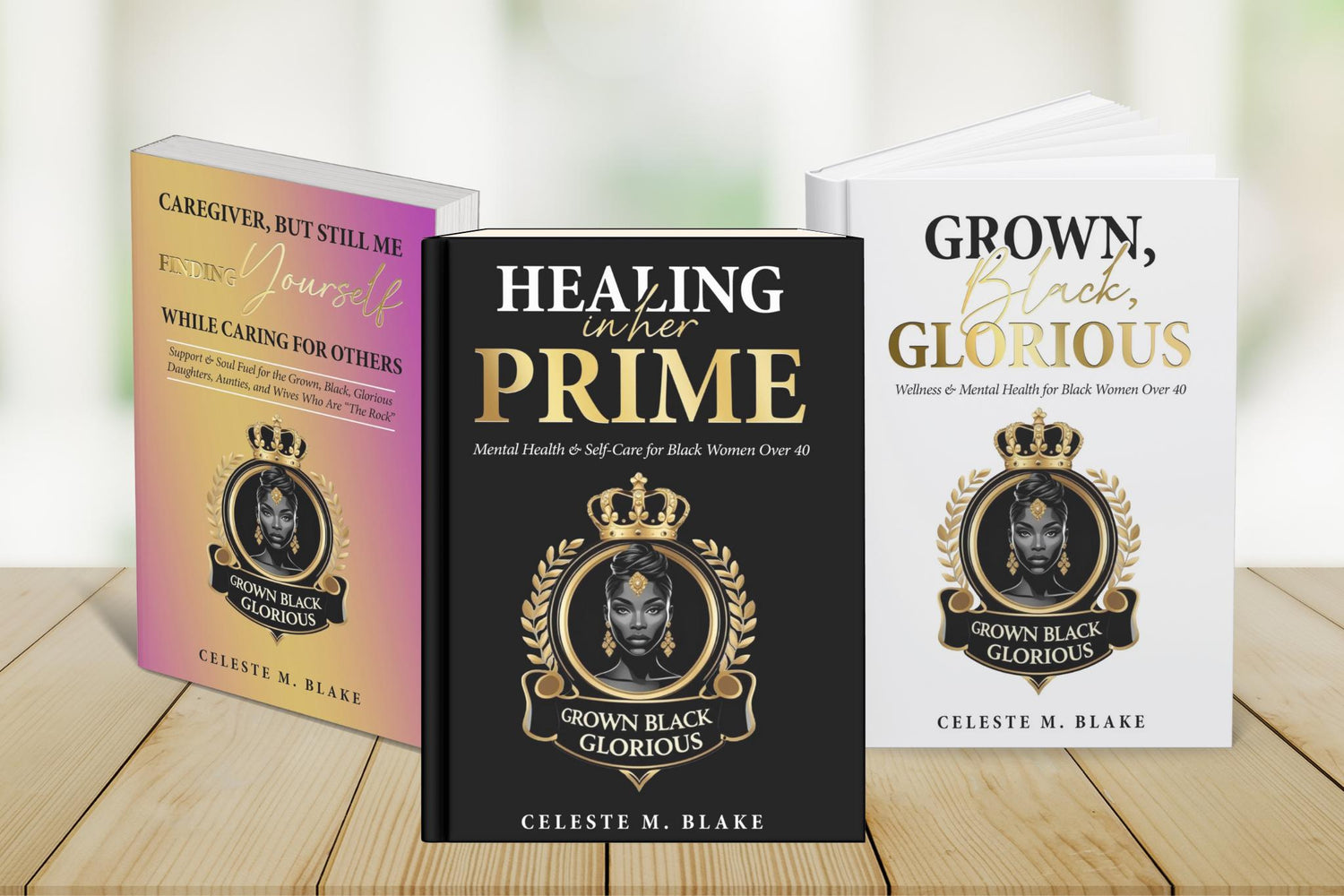
She has been buried under responsibility for a long time. This is the guide back to her. Healing in Her Prime walks you through the full arc of reclaiming yourself in midlife, your identity, your joy, your sense of what your life is actually for. She is still in there. This book helps you find her.
At some point, reflection has to turn into direction.
Get Healing in Her Prime - Start Reading Today
A Note Before You Go, Sis
This space was created with care, intention, and deep respect for the experiences many Black women carry. The reflections, stories, and tools shared here are offered for educational and inspirational purposes only.
They are not medical advice, psychological treatment, psychiatric care, or therapy, and they are not intended to replace the guidance of licensed professionals.
I am not a licensed medical provider, therapist, psychologist, psychiatrist, or mental health professional. The content on this site is meant to support reflection and personal growth, but it should not be used as a substitute for professional evaluation, diagnosis, or treatment.
If you are experiencing severe emotional distress, trauma, or mental health challenges, reaching out to a qualified healthcare or mental health professional is an important and supportive step. Professional care is not separate from healing, it is often a powerful part of it.
By engaging with this content, you acknowledge that it is shared for informational and inspirational purposes and that personal decisions about health, wellbeing, and care should always be made with the support of appropriate professionals when needed.
You deserve compassion, support, and every resource available to help you heal and grow.
---

With warmth and faith in your journey,