

There is a particular kind of exhaustion that does not show up on your face. It lives somewhere deeper. In the way you say I'm fine before anyone even asks. In the way you handle everything for everyone and then sit in your car for a few extra minutes before you go inside, because that is the only silence that belongs to you.
If you are reading this, you already know what reclaiming emotional health as a Black woman actually means. It means admitting something no one prepared you to say out loud: that the strength everyone depended on came at a price, and you are the one who paid it.
What Being the Strong One Has Actually Cost You
Nobody handed you the role. You grew into it gradually, without noticing, until one day you realized you had been wearing it so long you forgot what you felt like without it.
Strong Black woman emotional health is not a trending phrase. It is a real conversation about a real cost that too many women in our community have been paying for decades without a receipt. And it connects directly to what the complete emotional healing guide for Black women in midlife documents across the full arc of this journey, because the cost shows up at every stage.
Think about what it actually took to become the one everyone calls. The one who shows up. The one who holds it together when everything falls apart. That did not happen by accident. It happened because at some point, maybe very early, you learned that your emotions were a liability. That needing something was weakness. That the way you earned love, safety, and belonging was through usefulness.
So you became useful. Brilliantly, consistently, exhaustingly useful.
Every time you absorbed someone else's crisis, set aside your own grief, or smiled through something that deserved to be mourned, you made a small deposit into an account that was never in your name. You kept giving. The account kept growing. And the interest you paid was your own emotional health.
That is the cost. Not the hard times themselves. The habit of surviving them alone and calling it strength.
How Years of Strength Quietly Erode Emotional Health
The erosion does not announce itself. That is what makes it so hard to catch.
It starts as capability. You become incredibly good at handling things. You move through situations that would level other people, and somewhere along the way, handling hard things becomes your entire identity. People stop asking if you are okay because you always seem okay. After a while, you stop asking yourself.
This is where burnout and emotional health stop being separate conversations. If you have been living with identity loss alongside exhaustion, the Strong Black Woman Burnout: The Complete Recovery Guide names what that overlap actually feels like and why rest alone will not untangle it. And if you want to understand the deeper roots of why this work feels so heavy, Why Emotional Healing Feels Harder for Black Women Over 40 gets into exactly that.
After being the strong one as a Black woman for long enough, you stop recognizing the warning signs. Numbness starts to feel like peace. Detachment starts to feel like maturity. You mistake the absence of breakdown for the presence of healing, and that distinction matters more than most people realize.
What gets lost quietly over years of this: the ability to receive. The permission to want things for yourself. The instinct to name what is hurting before it escalates. The belief that your softness is safe anywhere.
Because the loss is gradual, you often do not register it until something stops working. A relationship. Your health. Your patience. Your sleep. Then you wonder when it happened. The honest answer is slowly, over a very long time, one suppressed need at a time.
Are You Tired of Being the Strong One?
You have been holding it together for so long. This free 5-page healing workbook was made for the woman who is finally ready to put some of it down.
Download I Am So Tired of Being Strong, free for Black women over 40 who are done performing okay.
Get the Free Workbook → I am Tired of Being Strong
The Moment You Realize the Strong Woman Needs Someone Too
There is usually a moment. It is not always dramatic. Sometimes it is a phone call where someone you love needs something from you again, and instead of rising to it, something in you just goes quiet. Not angry. Not resentful. Just quiet. And in that quiet, you finally hear the question you have been drowning out for years: who takes care of me?
That question is where reclaiming emotional health as a Black woman actually begins.
It does not feel like a beginning. It often feels like falling. Like failure. Like you have finally run out of something you were supposed to have in unlimited supply. But it is not failure. It is clarity. It is the moment your nervous system stops performing and starts telling the truth.
The work around emotional healing for Black women over 40 consistently points to midlife as the period when unprocessed emotional labor surfaces most loudly, when the body and mind stop deferring what they have needed for years. That is not a crisis. It is an invitation. A late one, maybe. But still an invitation.
The strong woman realizing she needs someone too is not evidence that something has gone wrong. It is evidence that something is finally going right. You are becoming honest. And honest is where everything worth building begins.
What Reclaiming Your Emotional Health Actually Requires
Here is where it gets real, because reclaiming is not the same as recovering.
Recovering implies returning to something. But most women doing this work do not want to go back. They want to go somewhere they have never actually been, a version of themselves that does not require constant sacrifice to feel worthy.
Emotional recovery for Black women over 40 requires a few things that are harder than they sound.
It requires grieving what the role cost you. Not just acknowledging it intellectually, but actually sitting with the loss. The years you spent managing everyone else's feelings while yours piled up somewhere unnamed. The relationships where you gave more than you ever received. The version of yourself you kept setting aside because she was inconvenient.
It requires learning to distinguish between genuine strength and performed invulnerability. Real strength includes the capacity to be affected. It includes tears. It includes asking for help without framing the request as a burden. It includes days where you do not have it together and you say so plainly.
It also requires community. Not the kind where you are still everyone's support system, but the kind where support is actually mutual. That may mean therapy. It may mean a small circle of women doing the same work. It may mean starting with yourself, which is the hardest and most essential place to begin.
None of this is linear. You will have weeks where it feels like you have cracked something open, followed by weeks where you slide back into every old pattern you thought you had released. That is not regression. That is the actual texture of healing. It spirals before it settles.
How to Be Strong for Others Without Abandoning Yourself
This is the part the conversation usually skips, because it stops at stop being so strong, as if the people in your life who depend on you are going to disappear because you finally started going to therapy.
You do not have to stop showing up. You have to change how you show up.
Strength that does not come at your own expense looks different. It includes boundaries you actually hold. It includes saying I cannot take that on right now without a four-paragraph explanation. It includes letting people be disappointed in you without interpreting their disappointment as proof you failed.
It means building something internal that does not collapse when someone else's world does. Not because you have become cold, but because you have become rooted. There is a difference between being the tree that bends in every storm and being the tree whose roots go deep enough to weather it without breaking.
You can still be generous. You can still love hard. You can still be the person your family and your community call on. But you have to be on that list too. Not as an afterthought. Not after everyone else is okay. Actually on the list, with actual space, with actual care directed inward.
That is what this work is asking of you. Not less strength. Different strength. Strength that includes you.
Reclaiming emotional health as a Black woman is not soft work. It is some of the hardest, most courageous work you will ever choose, because it means going against decades of conditioning that told you your needs were secondary.
They were not. They never were.
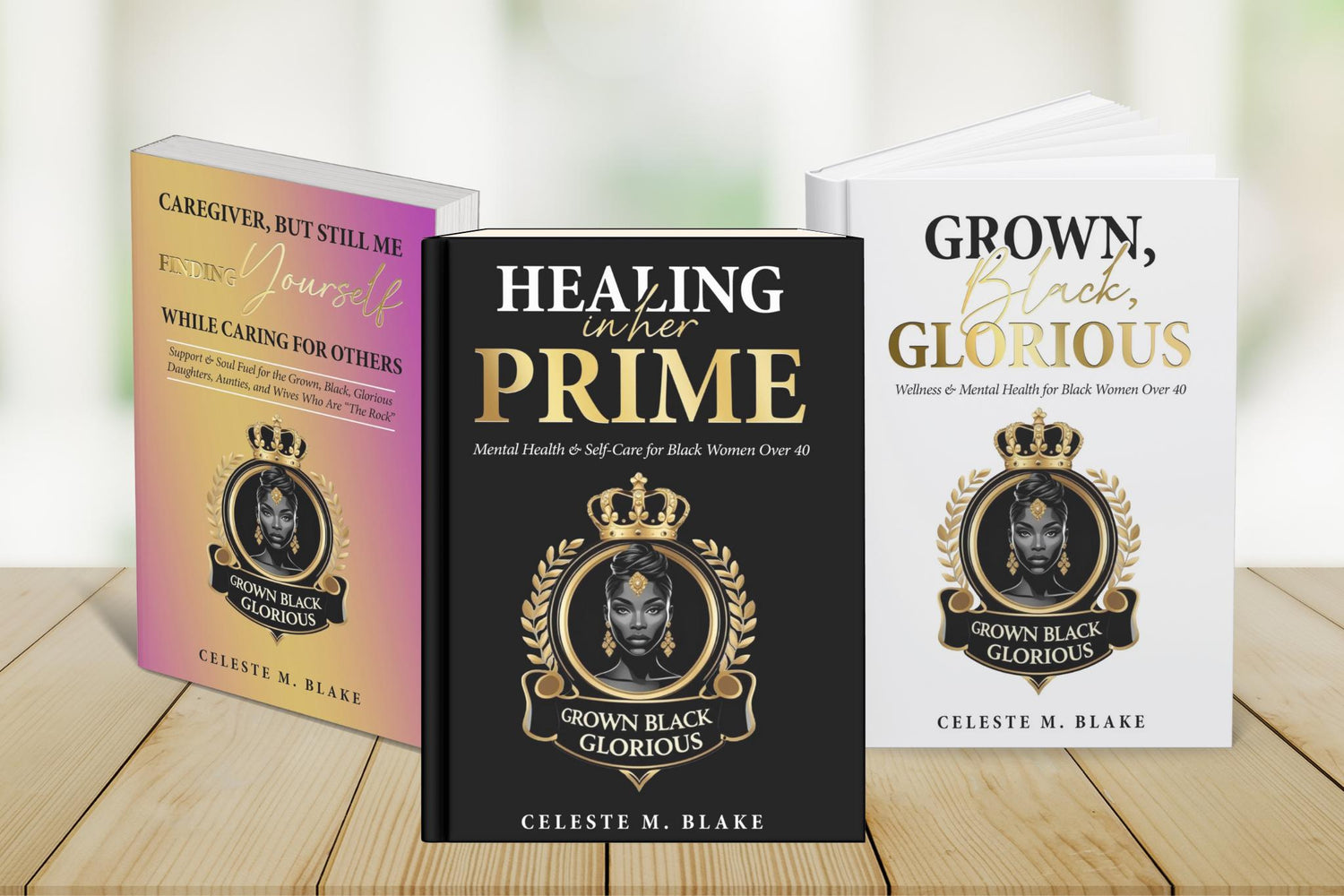
You were never just the strong one. You were always a whole person. Whole people get to heal. And if you are ready to start, really start, Healing in Her Prime was written for the woman who has been strong for so long she forgot she is allowed to need something too.
And if you want everything in one place, the Self-Care Journal Bundle for Black Women 40+ brings together the tools, the reflection prompts, and the framework to move through this work without doing it alone.
Explore the Bundle → emotional healing self-care bundle for Black women over 40
Are You Tired of Being the Strong One?
You have been holding it together for so long. This free 5-page healing workbook was made for the woman who is finally ready to put some of it down.
Download I Am So Tired of Being Strong, free for Black women over 40 who are done performing okay.
Get the Free Workbook → I am Tired of Being Strong
A Note Before You Go, Sis
This space was created with care, intention, and deep respect for the experiences many Black women carry. The reflections, stories, and tools shared here are offered for educational and inspirational purposes only.
They are not medical advice, psychological treatment, psychiatric care, or therapy, and they are not intended to replace the guidance of licensed professionals.
I am not a licensed medical provider, therapist, psychologist, psychiatrist, or mental health professional. The content on this site is meant to support reflection and personal growth, but it should not be used as a substitute for professional evaluation, diagnosis, or treatment.
If you are experiencing severe emotional distress, trauma, or mental health challenges, reaching out to a qualified healthcare or mental health professional is an important and supportive step. Professional care is not separate from healing, it is often a powerful part of it.
By engaging with this content, you acknowledge that it is shared for informational and inspirational purposes and that personal decisions about health, wellbeing, and care should always be made with the support of appropriate professionals when needed.
You deserve compassion, support, and every resource available to help you heal and grow.
---

With warmth and faith in your journey,
Celeste M Blake
Founder of Grown Black Glorious
Creator of Black Men in Partnership - an initiative of Grown Black Glorious